
Build a More Effective Waste Management Strategy for Your Business
Build a More Effective Waste Management Strategy for Your Business
Running an eco-friendly business requires a lot of strategic decisions, including managing resources and choosing green cleaning products. But there is more to it. Ultimately, every business also produces waste, whether this is from office paper, packaging, electronics, or even manufacturing materials. How you choose to handle that waste can have a significant impact on the company’s wider environmental efforts.
Waste management is central to an eco-friendly business, yet the thing is that it takes more than putting out recycling bins and hoping for the best. As a business, you need to understand what you throw away, where it comes from, and what can be realistically done in terms of prevention, reusing, or recycling. In short, managing your waste is a tough task, and that is why it requires a structured approach that can boost your sustainability goals and reduce purchasing and disposal costs at the same time.
Start With a Waste Audit
Before deciding how to improve waste management, you need to understand what your business is actually throwing away. A waste audit gives you a useful starting point.
What are the different waste streams your business creates, and more importantly, where do they originate? For instance, an office is more likely to generate paper, packaging, and electronic waste, while a restaurant would have concerns around food and containers.
It can be helpful to record how much waste is produced, how often collections are required, and what the different services cost your business. It is also worth identifying departments or processes responsible for unusually high volumes. The EPA emphasizes measurements as an important part of sustainable materials management because businesses can use them to identify opportunities to reduce environmental impact and operating costs.
Don’t Treat Every Type of Waste the Same
No matter how convenient it may seem to put everything into one big dumpster, different materials require different handling methods:
- Recycling and composting options: paper, cardboard, glass, metals, plastics, organic waste
- Separate recycling and reuse: electronics, batteries
- Specialist collection: construction, manufacturing, and industrial materials
- Specialist management responsibility: hazardous and regulated waste
Requirements can also vary by states and local jurisdictions.
Prevent Waste Before Planning Disposal
A good waste strategy doesn’t begin with deciding which recycling bin something belongs in. Ideally, it should begin with strategies to prevent the creation of more waste.
Source reduction and reuse are at the top of the waste management hierarchy, and they even appear before businesses approach the question of recycling. This means making conscious decisions to limit waste, such as:
- Ordering supplies in appropriate quantities
- Choosing products with less packaging
- Replacing disposable items with reusable alternatives
- Finding another use for materials that would otherwise be discarded (as long as it remains safe)
It pays to review your purchasing and inventory practices, as over-ordering creates both high waste and costs. This can affect surplus furniture, equipment, and supplies. More often than not, these can be donated, sold, or redistributed instead of being discarded.
Build a System Employees Will Actually Use
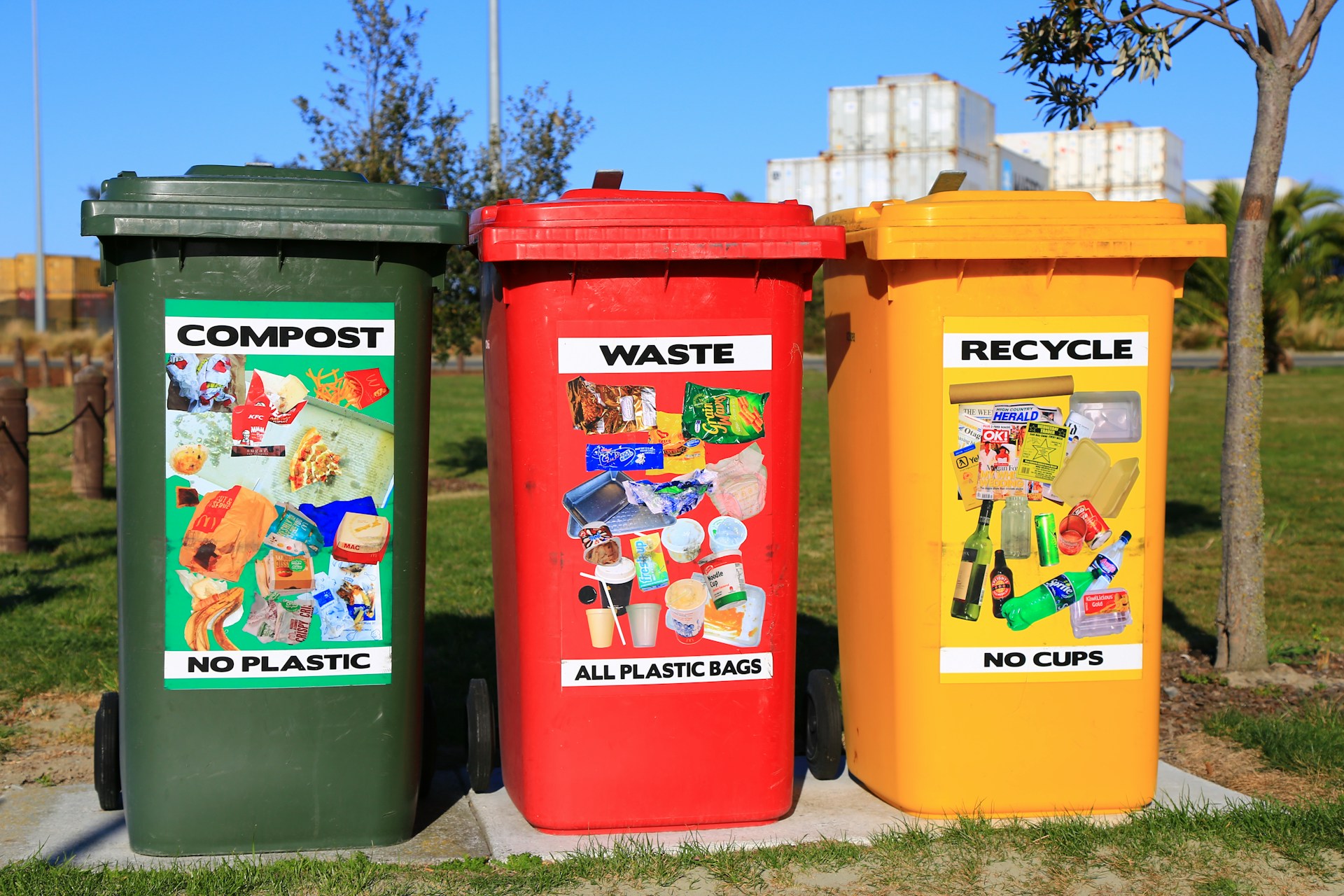
Even a carefully designed strategy can fail if employees don’t understand or use it. Recycling solutions should be easy to find and follow throughout the workplace. In short, you need to make it obvious which materials belong in which container and where to find these containers.
Waste procedures can form part of employee onboarding and workplace training for clarity. It is also a good idea to reach out to staff for input, especially when employees work with particular processes every day. They are more likely to spot unnecessary packaging, repeated printing, excess materials, and other sources of waste that management may not notice.
It is worth mentioning that recycling also has economic value beyond the company’s waste targets. In fact, recycling and reuse activities in the United States account for 681,000 jobs and $37.8 billion in wages in a single year. That makes recycling part of a much broader economic system, rather than being an individual environmental consideration.
Work With the Right Waste Management Partners
What happens after waste leaves your premises matters, so choosing the right service provider should be part of the strategy from the start.
There’s no miracle formula. You want to start with the information you’ve already gathered during the waste audit. This will help you figure out whether you need specialist services and when you need them, as the audit highlights the types and quantities of waste you produce and how frequently you need collections. As a rule of thumb, a provider offering the lowest general collection price may not necessarily offer the best recycling options, container sizes, or flexible services.
In fact, that is why many businesses turn to resources like the CurbWaste industry network to explore waste companies operating across their locations and identify the providers relevant to their requirements. This is one of the easiest approaches to compare services and learn what happens to the materials collected.
Bear in mind that waste management needs are likely to change for growing businesses, so the strategy that once worked may not be sufficient anymore. It’s worth regularly reviewing collection arrangements.
Measure Your Progress
It’s worth returning to the baseline you created through your audit and comparing it with current results.
Are you producing less waste?
What’s the proportion of waste being recycled?
Are collection costs changing?
Are containers being collected half-empty or overflowing?
Is the business still throwing away surplus materials?
This is a great way to track how well you are doing and whether you are going in the right direction.
Sustainability Needs a Bigger Picture
Managing waste effectively is an important step toward becoming a more environmentally responsible business. But it shouldn’t exist in isolation from other decisions.
Artificial intelligence is a good example. Businesses are rapidly adding AI tools to everyday processes, yet the data centers supporting these intensive digital workloads are consuming substantial resources. In fact, expanding AI servers in the United States could have an annual water footprint of 731 million to 1.125 billion cubic meters between 2024 and 2030. This isn’t negligible, and there’s no denying that the environmental impact will be visible. In many areas, it has already started to be noticeable.
In other words, while waste management is a central part of running an eco-friendly business, you need to align all your strategies towards the same sustainability goal.