How to Choose the Right Window Treatments for Every Room
How to Choose the Right Window Treatments for Every Room
It can feel like a constant puzzle to find the right balance between natural light and privacy in any home. You want to enjoy the sunshine, but not at the cost of comfort or feeling exposed. Often, the solution is choosing the perfect window treatments, which can completely change how a room looks and feels. When you understand what each room needs, you can pick options that are both stylish and practical.
Understanding Light Exposure
Before picking out window treatments, you need to know how much light your room gets. The direction your windows face makes a big difference. South-facing windows get strong, direct sun most of the day, while north-facing rooms have softer, more consistent indirect light. East-facing windows are bright in the morning, and west-facing windows get intense, often hot, afternoon sun. Noticing this natural pattern is the first step. Many design strategies to bring more natural light indoors work with your window coverings to make a space bright and welcoming.
Solutions for Bedrooms
The bedroom is a private space where good sleep depends on controlling light and privacy. You want to block out streetlights and early morning sun, but also have privacy during the day. Blackout options are popular, like roller shades, cellular shades, or curtain liners. Layering treatments often works best. You can use a sheer curtain for soft, diffused light during the day, then a heavier blackout curtain at night. Investing in custom drapery gives you a tailored fit and allows you to choose fabrics, linings, and styles that complement your décor while improving light control and privacy.
Combining this with a well-planned lighting plan for the bedroom creates a truly relaxing environment, day and night.
Living Area Strategies
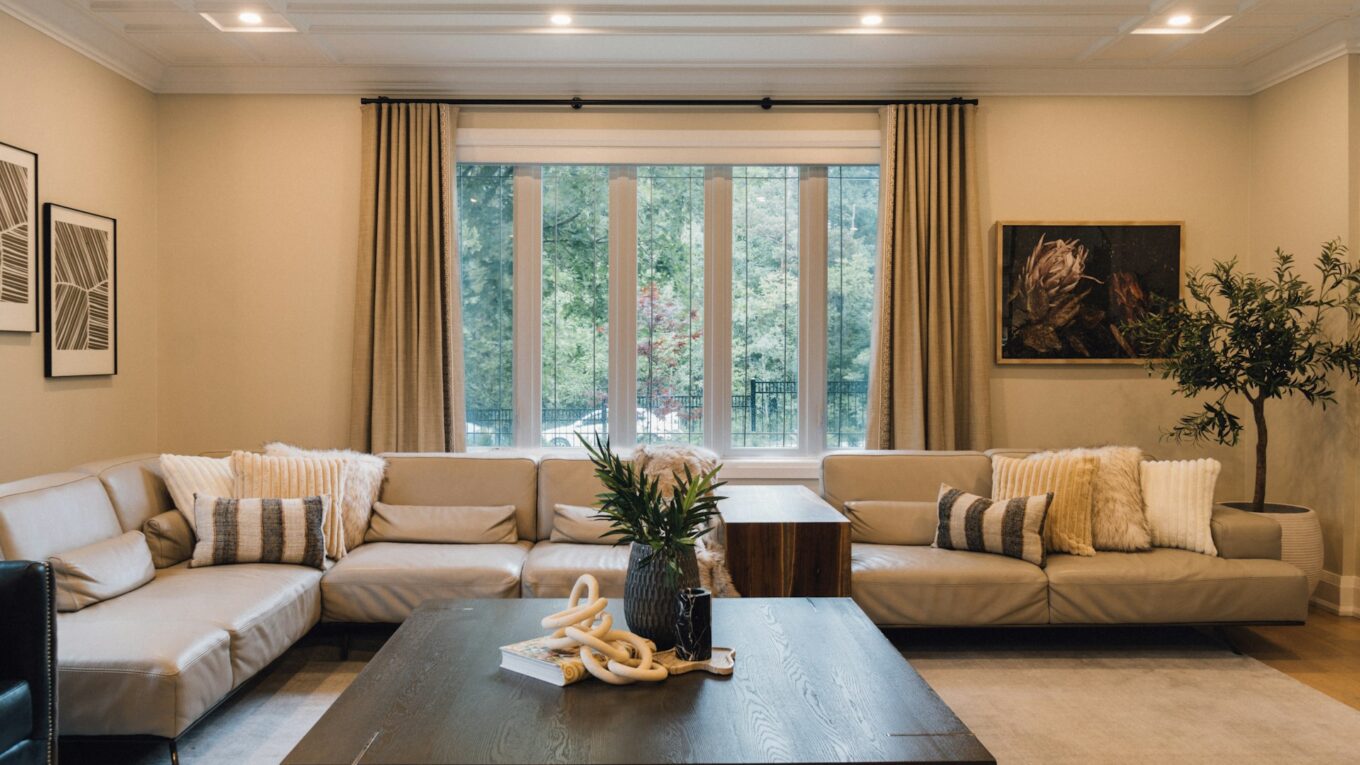
Living rooms are used for many things, and their window treatments should reflect that. You need options that keep neighbors from looking in, reduce glare on the TV, and protect furniture from UV rays, all while keeping the room feeling open and bright. Light-filtering cellular shades or sheer shades are great for this. They soften the light coming in without completely blocking it. For more control, consider wood or faux wood blinds; you can tilt the slats to direct light exactly where you want it. Top-down/bottom-up shades are another excellent choice, letting you lower the shade from the top to let light in while keeping the bottom covered for privacy.
Dining Room Ambiance
In the dining room, window treatments are more about setting a mood and adding a decorative touch. Privacy is still something to think about, but the main goal is often to create a welcoming atmosphere for meals with family and friends. Elegant drapery panels that frame the window can add softness, color, and a touch of formality. Roman shades offer a neat, tailored look that you can easily raise to enjoy the view or lower for a cozier dining experience. The fabric and style you choose should match your dining furniture and light fixtures to create a cohesive and beautiful space.
Professional Help for Window Treatments
While you can pick out and install window treatments yourself, getting help from a professional can make a big difference. A specialist can take exact measurements, which is especially important for custom-fit solutions or for unusual windows like arches or extra-large panes. They also have access to a wider range of materials, operating systems like motorization, and high-performance fabrics that offer benefits like better energy efficiency. An expert can give you personalized advice based on your home’s design and your family’s specific needs, making sure the result is both beautiful and highly practical.
Ultimately, the right window treatments are an investment in how comfortable and stylish your home feels. By thinking carefully about what each room needs, you can make choices that improve your daily life.
Image Credit: Unsplash